

Hessian and jute bags have stored and carried farm produce for well over a century, and for good reason: the breathable natural weave lets air move through so produce stays dry and lasts longer. But a bag that is too small splits, and one that is too big is awkward and wasteful. This guide walks through the common sizes, which produce suits which bag, and when to choose a solid weave over an open mesh.
Why jute for produce storage?
Unlike plastic, jute breathes. That airflow stops condensation building up inside the bag, which is what causes potatoes to sweat and onions to rot. Jute is also strong, reusable and fully compostable once it wears out. For anyone storing or selling fruit and vegetables, it is the traditional choice precisely because it works.
Hessian and jute bag sizes
| Bag | Approx. Size | Holds | Typical Use |
| Small produce bag | 57 × 38 cm | 10–12 kg | Home veg storage, small retail packs |
| Potato sack (medium) | 75 × 45 cm | 20–25 kg | Potatoes, carrots, root veg |
| Large garden sack | 94 × 56 cm | Heavy produce | Garden waste, bulk veg, firewood |
| Heavy-duty jute sack | 106 × 74 cm | Up to 100 kg | Grain, agricultural and landscaping loads |
Featured in this article
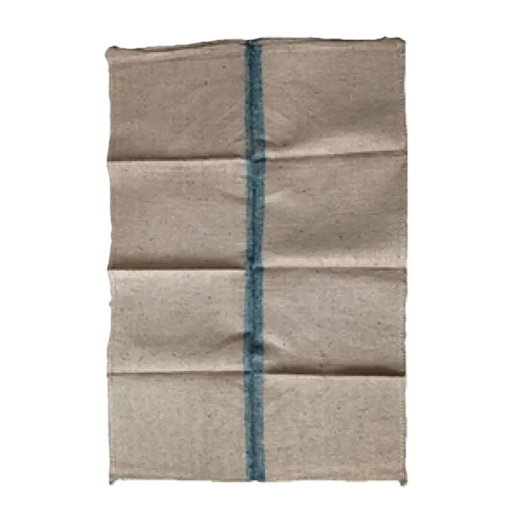
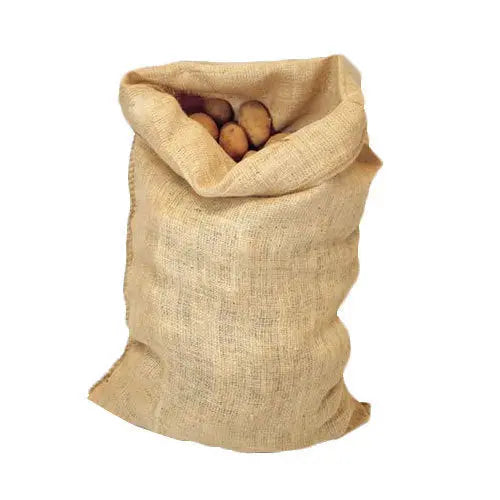
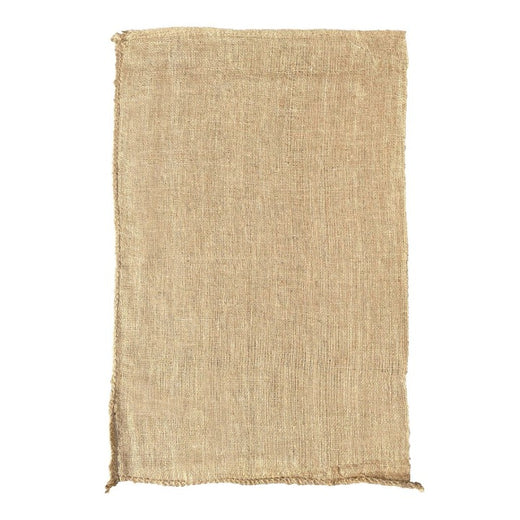
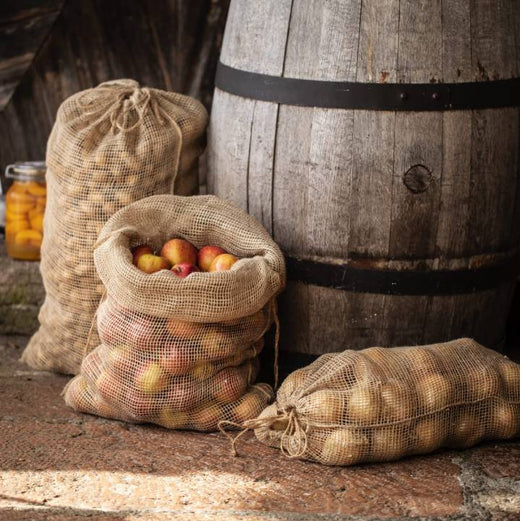
As a quick guide: for a household the 57 × 38cm bag suits most needs; for potatoes and commercial root veg the 75 × 45cm sack is the workhorse; and for heavy agricultural or landscaping loads the extra-large jute sack carries up to 100kg.
Solid weave vs mesh (leno) bags
Not all produce wants the same bag. Solid hessian sacks suit potatoes, grain and anything that benefits from a little shade and a lot of airflow. Open mesh (leno) bags are the better choice for onions, garlic and citrus, where you want maximum ventilation and the ability to see the produce. If your crop needs light and air - onions especially - reach for mesh; if it needs breathable storage out of direct sun, choose the solid weave.
-
Potatoes, carrots, root veg → solid hessian sack
-
Onions, garlic, citrus → mesh / leno bag
-
Grain, feed, heavy bulk → heavy-duty jute sack
-
Firewood, garden waste → large garden sack
Buying in bulk
Most sizes come in small packs of 10, 20, 25 or 50 as well as bulk bales of 500 or 1000 at wholesale pricing. If you are a grower, market seller or landscaper going through bags regularly, the bales bring the per-bag cost down significantly. For occasional home use, a small pack is all you need.
Looking after hessian bags
-
Keep them dry between uses - damp jute can mildew.
-
Store produce somewhere cool and ventilated; the bag helps airflow but is not a fridge.
-
Shake out and air bags before reusing, and they will last for years.
Browse every size, including mesh onion bags and bulk bales, on the hessian & jute produce bags collection.
Frequently asked questions
What size hessian bag do I need for potatoes?
The 75 × 45cm potato sack is the standard choice - it holds roughly 20–25kg, which is manageable to lift and ideal for storage and transport.
Are hessian bags good for storing onions?
Yes, but choose an open mesh (leno) jute bag rather than a solid sack. The extra ventilation keeps onions and garlic dry and extends their shelf life.
Are jute produce bags reusable?
Very. Kept dry, a good jute sack lasts for years of repeated use, and when it finally wears out it is fully compostable.
Can hessian bags be used as sandbags?
Yes - tightly woven hessian sacks with a drawstring are widely used for flood control and erosion barriers. Look specifically for sandbag-grade bags for that job.